 Add to Chrome
 Add to Firefox
 Add to Edge
SkillHarm: Lifecycle-Aware Skill-Based Attacks via Automated Construction
Jun 01, 2026
Agent skills occupy a privileged position in the agent workflow, as agents are expected to implicitly follow and execute them, rendering third-party skills a vulnerable attack surface. Existing studies have revealed unsafe agent behaviors induced by skill-based attacks, but they primarily evaluate poisoned skills within a single task execution and enumerate harms through ad-hoc risk lists. To bridge these gaps, we introduce SkillHarm, a benchmark of skill-based attacks across the skill-use lifecycle, paired with a systematic taxonomy of skill-relevant risks. SkillHarm evaluates two attack scenarios: Fixed-Payload Poisoning (FPP), where a fixed poisoned skill package directly compromises any task session that invokes it, and Self-Mutating Poisoning (SMP), where an initially benign execution silently mutates persistent skill content, deferring harm until a subsequent reuse. It further defines 12 risk types based on the agent workflow component targeted by the harm: data pipelines, system environments, and agent autonomy. To instantiate these attacks at scale, we build AutoSkillHarm, an automated construction pipeline with coding agents driven by natural-language harnesses. The resulting benchmark contains 879 attack samples across 71 skills. Experiments show that current agents remain vulnerable with attack success rates up to 86.3% in FPP and 69.3% in SMP. Our analysis further reveals a latent risk: many apparent attack failures stem from the agent failing to engage with the poisoned file rather than genuine resistance, and current defenses still fail to reliably mitigate the threat.

PReMISE: Policy Rubrics as Measurement Specifications for LLM Judges
May 29, 2026LLM judges are increasingly used to evaluate open-ended responses, but their scores depend strongly on the rubrics that condition them. A vague rubric asking for a response to be ``helpful and factual'' can reward polished answers that invent facts or violate user intent. We treat reusable rubrics as measurement specifications: changing the rubric changes the response quality measurement induced by a fixed judge. We introduce PReMISE, a framework that, given pairwise human-preference data, (i) discovers a policy-level rubric set, and (ii) audits any rubric set under LLM-judge use along four axes: structural adequacy, reliability, preference fit, and adversarial robustness. Across rubric sources no raw source is simultaneously reliable, preference-predictive, and adversarially robust; and high inter-rater agreement does not imply low exploitability. PReMISE is the only rubric source to score non-trivially on applicability, specificity, and effective dimensionality simultaneously. We contribute two audit-targeted repair operations: preference-rank selection raises judge accuracy on paired responses from $65.0\%$ to $68.6\%$, competitive with the strongest rubric-discovery baselines and leading on two of three judges in our cross-judge sweep; reliability-constrained refinement reduces the rate at which exploit responses receive high scores from $46.4\%$ to $36.0\%$ with little change in inter-judge agreement ($α{=}.531\to.519$).
DECOR: Auditing LLM Deception via Information Manipulation Theory
May 19, 2026Large language models can deceive by subtly manipulating truthful information -- omitting key facts, shifting focus, or obscuring meaning -- making such behavior difficult to detect. Existing black-box methods rely on coarse-grained judgments, offering limited interpretability and failing to pinpoint which facts were distorted and how. We introduce DECOR, a multi-agent framework grounded in Information Manipulation Theory for fine-grained auditing of strategic deception in LLM responses. DECOR decomposes input contexts into atomic informational units and scores each unit against the response across four dimensions of manipulation, producing interpretable manipulation profiles that are aggregated into a global deception index. We comprehensively evaluate DECOR on both single-turn and multi-turn deception detection benchmarks spanning real-world domains, and show that DECOR achieves state-of-the-art performance on both, outperforming competitive baselines. The framework generalizes across 15 frontier models, and ablation studies confirm the contribution of each key design component. Our findings demonstrate that fine-grained, theory-grounded auditing of information manipulation offers an effective and interpretable path for LLM deception detection.
SWAN: Semantic Watermarking with Abstract Meaning Representation
May 05, 2026We introduce SWAN (Semantic Watermarking with Abstract Meaning Representation), a novel framework that embeds watermark signatures into the semantic structure of a sentence using Abstract Meaning Representation (AMR). In contrast to existing watermarking methods, which typically encode signatures by adjusting token selection preferences during text generation, SWAN embeds the signature directly in the sentence's semantic representation. As the signature is encoded at the semantic structure level, any paraphrase that preserves meaning automatically preserves the signature. SWAN is training-free: watermark injection is achieved by prompting an LLM to generate sentences guided by a selected AMR template while maintaining contextual coherence, and detection uses an off-the-shelf AMR parser followed by a simple one-proportion z-test. Empirical evaluation on the RealNews benchmark shows SWAN matches state-of-the-art detection performance on unaltered watermarked text, while significantly improving robustness against paraphrasing, increasing detection AUC by up to 13.9 percentage points compared to prior methods. These results demonstrate that SWAN's approach of anchoring watermarks in AMR semantic structures provides a simple, effective, and prompt-based method for robust text provenance verification under paraphrasing, opening new avenues for semantic-level watermarking research.
Adversarial Arena: Crowdsourcing Data Generation through Interactive Competition
Apr 20, 2026Post-training Large Language Models requires diverse, high-quality data which is rare and costly to obtain, especially in low resource domains and for multi-turn conversations. Common solutions are crowdsourcing or synthetic generation, but both often yield low-quality or low-diversity data. We introduce Adversarial Arena for building high quality conversational datasets by framing data generation as an adversarial task: attackers create prompts, and defenders generate responses. This interactive competition between multiple teams naturally produces diverse and complex data. We validated this approach by conducting a competition with 10 academic teams from top US and European universities, each building attacker or defender bots. The competition, focused on safety alignment of LLMs in cybersecurity, generated 19,683 multi-turn conversations. Fine-tuning an open-source model on this dataset produced an 18.47% improvement in secure code generation on CyberSecEval-Instruct and 29.42% improvement on CyberSecEval-MITRE.
ARES: Adaptive Red-Teaming and End-to-End Repair of Policy-Reward System
Apr 20, 2026Reinforcement Learning from Human Feedback (RLHF) is central to aligning Large Language Models (LLMs), yet it introduces a critical vulnerability: an imperfect Reward Model (RM) can become a single point of failure when it fails to penalize unsafe behaviors. While existing red-teaming approaches primarily target policy-level weaknesses, they overlook what we term systemic weaknesses cases where both the core LLM and the RM fail in tandem. We present ARES, a framework that systematically discovers and mitigates such dual vulnerabilities. ARES employs a ``Safety Mentor'' that dynamically composes semantically coherent adversarial prompts by combining structured component types (topics, personas, tactics, goals) and generates corresponding malicious and safe responses. This dual-targeting approach exposes weaknesses in both the core LLM and the RM simultaneously. Using the vulnerabilities gained, ARES implements a two-stage repair process: first fine-tuning the RM to better detect harmful content, then leveraging the improved RM to optimize the core model. Experiments across multiple adversarial safety benchmarks demonstrate that ARES substantially enhances safety robustness while preserving model capabilities, establishing a new paradigm for comprehensive RLHF safety alignment.
Rethinking Visual Privacy: A Compositional Privacy Risk Framework for Severity Assessment with VLMs
Mar 23, 2026Existing visual privacy benchmarks largely treat privacy as a binary property, labeling images as private or non-private based on visible sensitive content. We argue that privacy is fundamentally compositional. Attributes that are benign in isolation may combine to produce severe privacy violations. We introduce the Compositional Privacy Risk Taxonomy (CPRT), a regulation-aware framework that organizes visual attributes according to standalone identifiability and compositional harm potential. CPRT defines four graded severity levels and is paired with an interpretable scoring function that assigns continuous privacy severity scores. We further construct a taxonomy-aligned dataset of 6.7K images and derive ground-truth compositional risk scores. By evaluating frontier and open-weight VLMs we find that frontier models align well with compositional severity when provided structured guidance, but systematically underestimate composition-driven risks. Smaller models struggle to internalize graded privacy reasoning. To bridge this gap, we introduce a deployable 8B supervised fine-tuned (SFT) model that closely matches frontier-level performance on compositional privacy assessment.
When Actions Go Off-Task: Detecting and Correcting Misaligned Actions in Computer-Use Agents
Feb 09, 2026Computer-use agents (CUAs) have made tremendous progress in the past year, yet they still frequently produce misaligned actions that deviate from the user's original intent. Such misaligned actions may arise from external attacks (e.g., indirect prompt injection) or from internal limitations (e.g., erroneous reasoning). They not only expose CUAs to safety risks, but also degrade task efficiency and reliability. This work makes the first effort to define and study misaligned action detection in CUAs, with comprehensive coverage of both externally induced and internally arising misaligned actions. We further identify three common categories in real-world CUA deployment and construct MisActBench, a benchmark of realistic trajectories with human-annotated, action-level alignment labels. Moreover, we propose DeAction, a practical and universal guardrail that detects misaligned actions before execution and iteratively corrects them through structured feedback. DeAction outperforms all existing baselines across offline and online evaluations with moderate latency overhead: (1) On MisActBench, it outperforms baselines by over 15% absolute in F1 score; (2) In online evaluation, it reduces attack success rate by over 90% under adversarial settings while preserving or even improving task success rate in benign environments.
Embedded AI Companion System on Edge Devices
Jan 13, 2026Computational resource constraints on edge devices make it difficult to develop a fully embedded AI companion system with a satisfactory user experience. AI companion and memory systems detailed in existing literature cannot be directly used in such an environment due to lack of compute resources and latency concerns. In this paper, we propose a memory paradigm that alternates between active and inactive phases: during phases of user activity, the system performs low-latency, real-time dialog using lightweight retrieval over existing memories and context; whereas during phases of user inactivity, it conducts more computationally intensive extraction, consolidation, and maintenance of memories across full conversation sessions. This design minimizes latency while maintaining long-term personalization under the tight constraints of embedded hardware. We also introduce an AI Companion benchmark designed to holistically evaluate the AI Companion across both its conversational quality and memory capabilities. In our experiments, we found that our system (using a very weak model: Qwen2.5-7B-Instruct quantized int4) outperforms the equivalent raw LLM without memory across most metrics, and performs comparably to GPT-3.5 with 16k context window.
S&P 500 Stock's Movement Prediction using CNN
Dec 25, 2025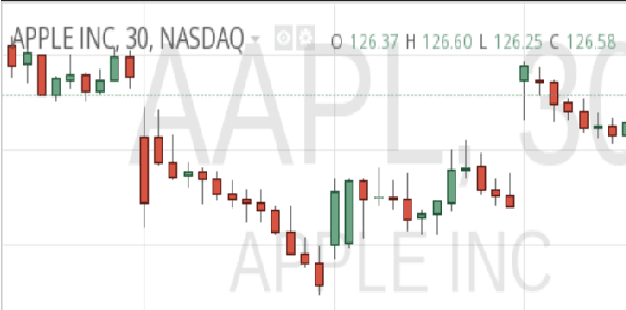
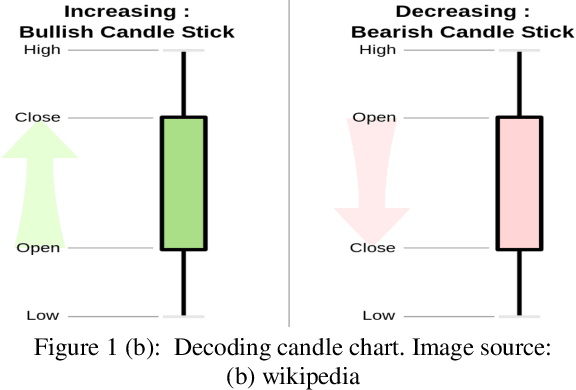
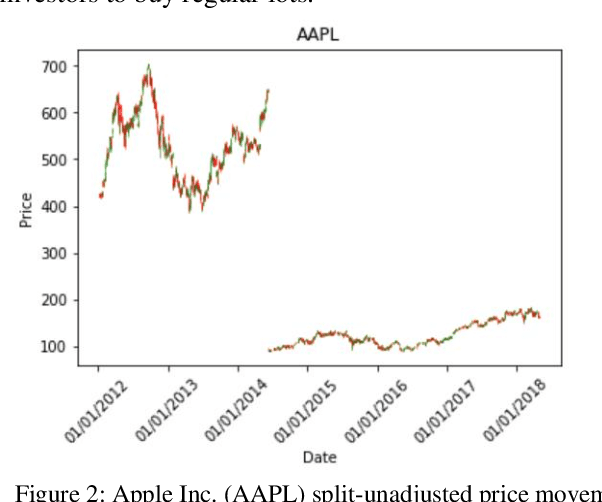
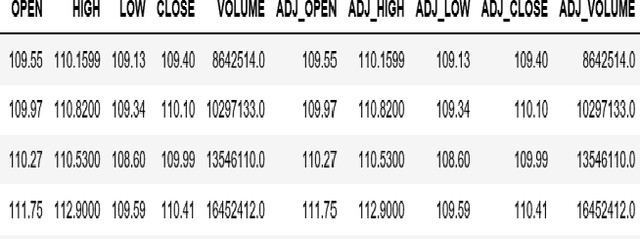
This paper is about predicting the movement of stock consist of S&P 500 index. Historically there are many approaches have been tried using various methods to predict the stock movement and being used in the market currently for algorithm trading and alpha generating systems using traditional mathematical approaches [1, 2]. The success of artificial neural network recently created a lot of interest and paved the way to enable prediction using cutting-edge research in the machine learning and deep learning. Some of these papers have done a great job in implementing and explaining benefits of these new technologies. Although most these papers do not go into the complexity of the financial data and mostly utilize single dimension data, still most of these papers were successful in creating the ground for future research in this comparatively new phenomenon. In this paper, I am trying to use multivariate raw data including stock split/dividend events (as-is) present in real-world market data instead of engineered financial data. Convolution Neural Network (CNN), the best-known tool so far for image classification, is used on the multi-dimensional stock numbers taken from the market mimicking them as a vector of historical data matrices (read images) and the model achieves promising results. The predictions can be made stock by stock, i.e., a single stock, sector-wise or for the portfolio of stocks.
* 9 pages, 19 diagrams. Originally submitted as a part of my Stanford University program taught by Dr. Fei Fei Lee and Andrej Karpathy CS231N 2018